
I remember when desktop publishing software became widely available. It seemed that anyone with a computer could become a designer or artist. Suddenly, people had access to hundreds of fonts (yes including Comic Sans), decorative borders, clip art, filters, colours and effects that had previously required specialist equipment and expertise.
The results were not always… beautiful.

(C) EvelynGarnet
In 1994, Wired observed that the desktop-publishing revolution had produced “some really ugly pieces of paper.” People could select a font from one menu (don’t get me started on Comic Sans), clip art from another and a border from somewhere else, but access to those choices did not mean they understood how to combine them effectively.
Owning a computer, the article concluded, did not make someone a graphic designer. “You Built It, You Live in It” — Wired, 1994
Early desktop publishing became associated with what was sometimes called the ransom-note effect: documents crowded with competing fonts, colours and images. People used everything because the software allowed them to, not because the design needed it.
Photoshop presented a similar temptation. I remember when people started using the Lens Flare filter. The effect was new and it looked impressive. But once everyone could apply the same filter, the novelty disappeared.
As one early commentator recognised, if your only contribution was putting an image through a Photoshop filter, people would eventually respond: “So what?” “You Can’t Believe Your Eyes” — Wired, 1995
Photoshop enabled image production. It did not enable visual judgement or impart design skills on the user.
The Tool Did Not Create the Artist
Photoshop gave more people the technical capacity to manipulate images instead of teaching them about:
composition;
proportion and balance;
colour relationships;
visual hierarchy;
symbolism;
typography;
cultural context;
audience and purpose;
originality;
restraint.
The same inability to deliver true mastery of a domain, other than to use the tool itself, is true of other technologies.
The pencil did not make everyone a great writer.
The calculator did not make everyone a great mathematician.
Computers did not make everyone a programmer.
Dreamweaver did not make everyone a web designer.
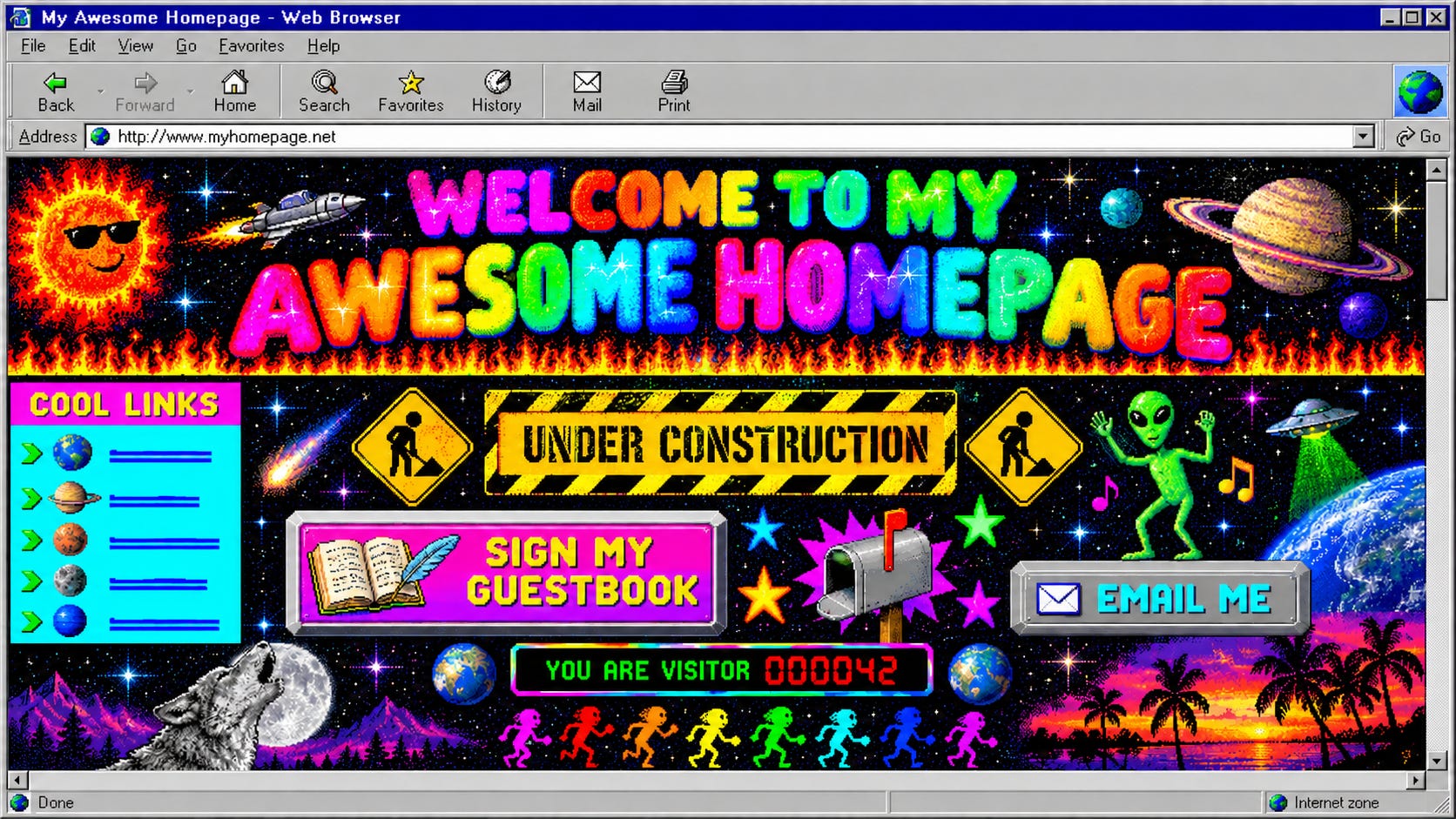
Each tool lowered a barrier. It allowed more people to participate and helped skilled practitioners work faster. But it did not replace talent, determination, knowledge or experience. Long gone are the days when you could ask your neighbours kid to knock up a website for your business.
From Photoshop Filters to AI Slop
Generative AI has taken this to an entirely new level.
A person no longer needs to learn how to manipulate an image in Photoshop. They don’t even need Photoshop. Instead, they can describe what they want and receive a finished-looking result within seconds.
The same person can generate an article, presentation, video, website, song, business plan or piece of code. This is genuinely remarkable as it can unlock creativity, help people test ideas and allow students to attempt work that was previously beyond their technical reach.
But it has also contributed to what is increasingly called AI slop. Those large quantities of generic, repetitive and superficially polished content produced with little human intention or judgement. I sometimes lay awake at night concerned that all these new data centres are only needed to store the abundance of such slop for human-kind in perpetuity.
I’m not innocent of generating this type of content with new technology. To begin with it’s novel and fun. I recall in the early 1990s, I took an image of my bosses car (the butt of office jokes) and photoshopped it into a dumpster. I may have even used ChatGPT to put a mohawk on my dog!

But I digress…
AI slop is not simply bad AI-generated art or essays. It’s what happens when our ability to produce exceeds our capacity, or willingness, to judge.
For example, an image may have the correct number of fingers, but that doesn’t mean it communicates anything worthwhile.
The article may be grammatically correct, but that doesn’t mean it contains a meaningful idea.
The code may run, but that doesn’t mean it is secure.
The lesson plan may look complete, but that doesn’t mean it will result in learning.
AI slop is what we get when production is democratised but judgement is not.
Access Is Not Mastery
Generative AI can help almost anyone produce something that looks competent. However, looking competent and being competent are not the same thing.
A novice programmer may generate working code but fail to notice a security vulnerability. Someone without mathematical understanding may accept a plausible but incorrect calculation. A student may submit a persuasive argument without recognising that the evidence is weak or fabricated.
A person with little visual literacy may generate an attractive image without seeing that its composition is confused, its symbolism is inappropriate or its style is completely wrong for the audience.
The output conceals what the person does not know.
This creates a dangerous illusion because the product appears sophisticated, we assume the person who produced it has developed the corresponding expertise because AI can imitate the surface of expertise.
We Have Seen This in Web Design
Early website-building tools such as Dreamweaver appeared to make web design accessible to everyone.
For a while, the kid down the road really could build you a website.
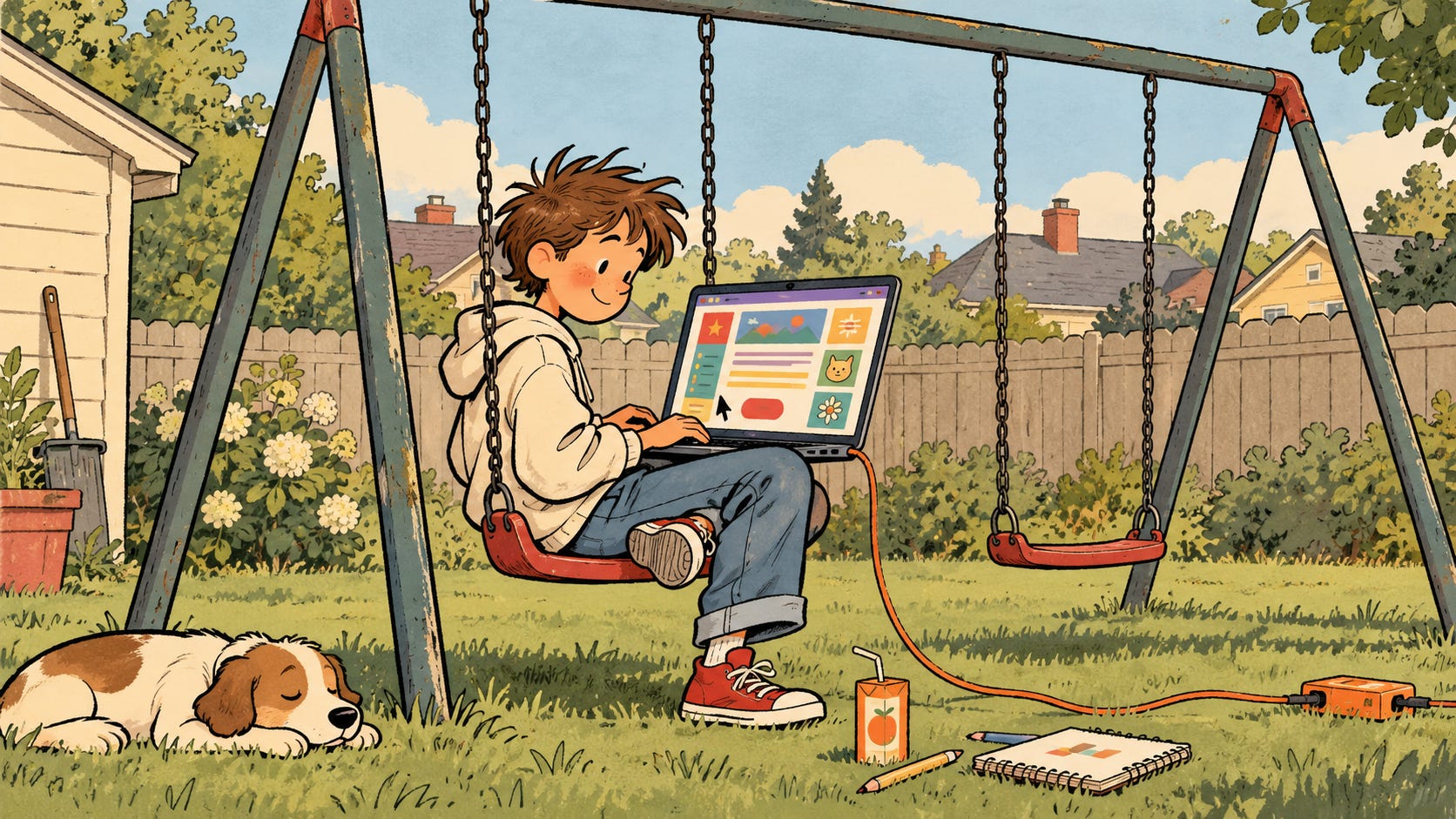
But as the technology housing the Internet advanced, so too did the capabilities of websites. They soon became powerful systems connected to databases, payment platforms, analytics and cloud services. They needed to be accessible, responsive, secure and usable across many devices.
Making a basic website became easier. Creating an excellent one became far more complex.
The tool lowered the barrier to entry, but the expectations of the profession rose.
Generative AI is likely to create the same pattern across many vocations. When everyone can generate a reasonable website, illustration, report, lesson plan or piece of code, reasonable work becomes less valuable.
The baseline moves upward.
Generative AI is making it easier for everyone to begin and much harder to stand out.
Why Mastery Will Matter More
If competent-looking content becomes cheap and abundant, professional value will shift away from producing a first draft.
It will move toward the ability to:
identify worthwhile problems;
recognise quality;
detect subtle errors;
understand context and consequences;
compare competing solutions;
make judgements under uncertainty;
reject clichéd or inappropriate work;
push an idea beyond the obvious;
take responsibility for the result.
These capabilities do not come from access to a tool. They develop through knowledge, practice, feedback, failure and sustained engagement with a discipline. As more and more generic content floods our screens, expertise becomes the filter between generation and publication.
The professional of the future may not be the person who can produce the most. It may be the person who knows what is worth producing and what should be discarded.
What Does This Mean for Education?
One knee-jerk response to generative AI has been to assume students no longer need to learn as much because the AI can retrieve information and produce the work for them.
I think the opposite is true.
Students need strong disciplinary foundations precisely because they will be using AI.
Because they cannot evaluate an AI-generated response in a field they do not understand - let alone prompt for it. When something goes wrong they cannot identify what is missing, challenge a faulty assumption or improve a weak solution without knowing what good work looks like.
Every discipline therefore needs to identify its equivalent of mathematical number sense:
What must students know without consulting AI?
What should they still be able to do independently?
What common errors should they recognise?
What principles should guide their judgement?
What knowledge will allow them to challenge the tool?
This does not mean banning AI, because students will use it regardless, or returning to a curriculum based entirely on memorisation. It means protecting the foundational learning students need before asking technology to accelerate it.
From Generation Literacy to Judgement Literacy
Much of the current conversation about AI education focuses on prompting. Students are being taught how to ask AI for what they want, refine their instructions and generate better outputs. These may be useful skills, but they are not enough.
If we teach students only how to generate, we are preparing them to contribute to the slop. They must also learn to look closely, compare alternatives and recognise quality. They need to identify generic work, question the first output and test claims against evidence. Most importantly, they must be able to explain why something is ineffective, revise it with intention and recognise when an output should not be used at all.
The curriculum needs to move beyond generation literacy towards judgement literacy.
Raise the Ceiling, Not Just Lower the Floor
Generative AI should not simply help students complete the same assignments more quickly. I see its role in reducing the effort required for routine parts of a task as we can use that capacity to attempt more ambitious work.
Students might analyse larger datasets, explore more alternatives, build more sophisticated prototypes or work on problems across several disciplines. They might use AI to test an idea, expose its weaknesses and refine it through several cycles.
The question should not be:
How can AI help students finish this task faster?
It should be:
What can students now attempt that was previously too difficult, expensive or time-consuming?
In 2010, I taught a class that had student teams produce mobile games from start to finish in 13 weeks. There was no AI to assist. The games were, for the most part, polished and playable.
In 2027, I will be allowing 3rd year game students to freely use geneartive AI to develop a mobile game. Just imagine how much I’ve upped my expectations of the final product. By 3rd year I would expect these students have a certain level of mastery of the game production process. We shall see.
It will be through their use of the AI that their lack of ability will be revealed.
A Progression Towards Mastery
Most importantly, students should not move directly from knowing very little to outsourcing most of the work to AI. They need a deliberate progression:
Build foundations: Develop core knowledge and practise essential skills, sometimes without AI.
Use AI with guidance: Explore what the technology can do while comparing its output with disciplinary standards.
Critique and correct: Identify errors, omissions, assumptions, clichés and bias.
Collaborate and extend: Use AI to explore alternatives and attempt more ambitious work.
Create beyond the obvious: Add original judgement, contextual understanding and personal insight.
Explain and take responsibility: Defend the final result, regardless of which tools helped produce it.
The aim is not to produce experts who never use AI. It is to develop experts who are not helpless without it and are not uncritical when using it.
Preparing Students for a Vocation
Perhaps we need to distinguish between preparing students for a job and preparing them for a vocation.
Whereas, a job can be seen as a collection of tasks (and AI is becoming increasingly capable of completing those tasks), a vocation involves more: purpose, judgement, relationships and responsibility.
As AI takes on more of this visible work, these human dimensions become even more important. Our curriculum must teach students not only how to complete a task, but why it matters, who it affects and what good work looks like.
Producing Something Worth Keeping
Generative AI will not make everyone brilliant.
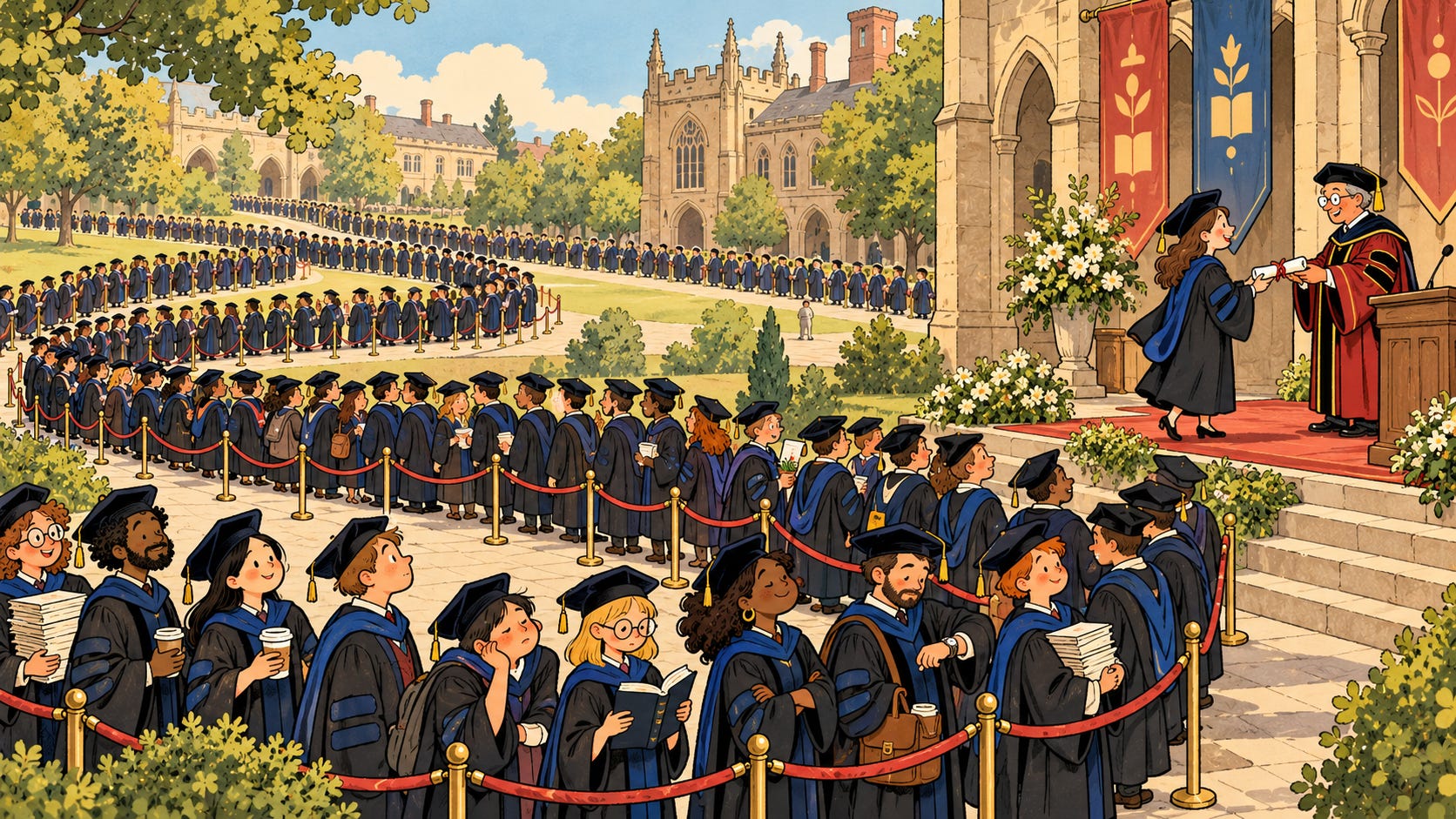
It will make it easier for everyone to produce something that looks competent.
Our responsibility as educators is to help students move beyond that appearance.
We should not hollow out the curriculum because information and production have become easier. We should make it deeper in its foundations, more ambitious in its applications and more human in its purpose.
AI has already made content abundant.
The educational challenge is helping students develop the knowledge, taste and judgement to produce something worth keeping.